China Best Wooden Playsets Suppliers for Global Buyers?
Choosing China’s best wooden playsets suppliers requires more than comparing prices, catalogs, and polished factory photographs. Global buyers need evidence of real manufacturing experience, consistent quality control, and dependable export support. A suitable supplier should explain its timber sources, moisture-control process, coating system, and hardware specifications clearly. It should also provide practical documents, product testing records, installation guidance, and responsive after-sales communication.
Safety comes first.
Dr. Joe Frost, a respected playground researcher, wrote, “Playgrounds are essential environments for children’s development.” His view explains why wooden playsets should be judged as children’s active environments, not ordinary garden furniture. A strong supplier understands load-bearing joints, rounded edges, ground anchoring, splinter prevention, drainage, and long-term weather exposure. Buyers should request factory audit evidence, sample inspections, packaging details, and production photographs showing unfinished components. Small details matter, such as stainless-steel bolts, sealed end grain, and accurately drilled connection points.
However, no supplier is perfect. Even experienced factories may struggle with seasonal moisture changes, communication delays, or unexpected shipping damage. That deserves honest discussion. The “best” partner depends on your market, budget, climate, customization needs, and required delivery schedule. This guide compares China’s leading wooden playsets suppliers through those practical standards. It considers manufacturing capability, design flexibility, safety awareness, certifications, pricing transparency, and buyer feedback. The goal is not to promote the cheapest option. It is to help importers choose a reliable partner with evidence behind its promises.
What Defines a Reliable Wooden Playset Supplier in China?
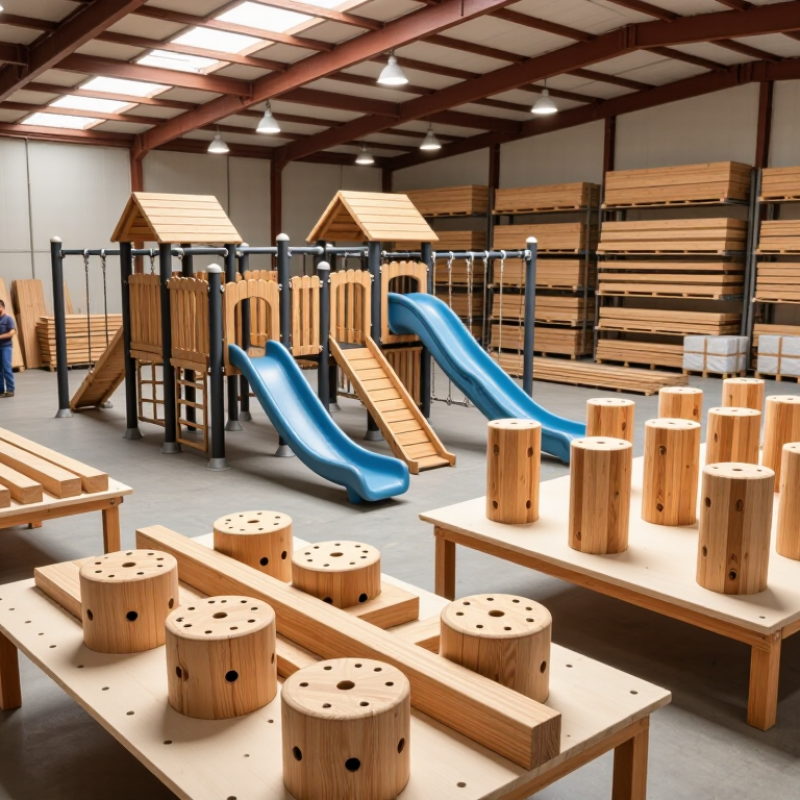
A reliable wooden playset supplier in China offers more than attractive catalog photos. They explain material choices, production limits, and safety testing in clear language. During factory visits, buyers should inspect timber storage, sanding areas, drainage details, and hardware control. Damp wood near the workshop may signal future cracking or mold risks. Ask for current test reports, material specifications, and traceable quality records. Experienced suppliers can also provide samples before mass production and explain how designs change for different climates.
Tips: Request a pre-production sample. Check every joint, ladder rung, coating, and sharp edge. Confirm wood moisture levels and packaging methods. A detailed inspection checklist prevents expensive misunderstandings later.
Communication is another practical measure of reliability. Strong suppliers answer technical questions directly, share realistic lead times, and report problems before shipment. They should understand installation manuals, replacement parts, container loading, and after-sales support. One successful sample is not enough; consistent quality across several batches matters more. Buyers can arrange independent inspections at key production stages, especially before packing. This adds cost, but it reduces uncertainty. A polished showroom can still hide weak internal processes. I have seen specifications change when conversations remain vague, so written confirmation is essential. No supplier is perfect. The dependable ones accept questions, document corrections, and improve when a detail fails inspection.
How to Evaluate Wooden Playset Quality, Safety, and Certifications
When evaluating wooden playset suppliers in China, inspect the timber before reading the certificate. Look for kiln-dried wood, sealed end grains, rounded edges, and smooth surfaces without splinters. Moisture content should remain stable for the destination climate. Otherwise, boards may crack or twist after installation. A supplier should provide batch records, treatment details, and photographs from production.
Safety needs measurable evidence. The U.S. Consumer Product Safety Commission reports over 200,000 playground-related emergency-department injuries each year, with falls causing most incidents. Check platform height, guardrail openings, swing-zone clearance, anchoring, and impact-absorbing surfacing. Ask whether testing follows ASTM F1148 or EN 1176 requirements. For materials and coatings, request relevant chemical safety test reports. Documents should identify the exact model, production batch, test method, and laboratory.
Do not trust certificates alone. Verify the laboratory’s ISO/IEC 17025 accreditation and compare the report with the shipped product. During supplier audits, I also inspect fasteners, rope wear, drainage holes, and package instructions. Small details matter. One weakness remains: outdoor durability is difficult to predict from a short laboratory test. Buyers should request weathering data and conduct sample installations before placing large orders. A cheaper set can become expensive when warped boards, missing hardware, or unclear assembly instructions appear.
Which Wooden Playset Designs Suit Different Global Markets?
Wooden playset designs should follow local space, climate, and play habits. UN DESA’s 2018 revision projected that 68% of the world’s population may live in urban areas by 2050. Compact towers, vertical climbing walls, and low-noise slides suit dense European and Asian cities. They need smaller footprints, shaded platforms, and durable coatings for humid climates.
North American buyers often prefer larger backyard structures, with swings, forts, and multiple activity zones. Technavio’s 2024 playground equipment report forecasts steady global market growth through 2028, driven partly by residential demand. Designs for this market should support easy assembly and replaceable components. In Australia and coastal regions, raised decks, stainless fixings, and strong drainage reduce weather-related maintenance.
Every market still needs evidence, not assumptions. WHO reported that 81% of adolescents were insufficiently active in 2016, showing the value of climbing, balancing, and active movement. EN 1176, ASTM F1487, and AS 4685 provide useful safety references, depending on the destination. A common mistake is adding too many features. Children may ignore them. My practical view is less certain: cultural preferences change quickly, so suppliers should test prototypes with local buyers before final production. Safety surfacing, fall height, timber treatment, and installation instructions deserve equal attention.
How to read the chart: Design suitability is scored from 1 to 10 using practical market considerations such as available outdoor space, climate exposure, demand for climbing activity, preference for natural materials, shade requirements, and inclusive accessibility. These are planning benchmarks rather than company sales data.
How China Wooden Playset Suppliers Manage Customization and Production
China wooden playset suppliers often manage customization through a clear sample-to-production process. Buyers usually provide dimensions, sketches, material preferences, colors, and target age groups. Experienced suppliers convert these details into drawings, 3D models, and a prototype for review.
A practical factory checks wood moisture before cutting. This reduces cracking, warping, and loose joints during later assembly. CNC equipment can produce repeated parts accurately, while skilled workers still inspect edges by hand. Sanding matters. Children’s surfaces should feel smooth, especially around ladders, platforms, and handrails. Suppliers may also test structural joints, anchoring points, and swing connections before packing.
Customization can involve more than appearance. Suppliers may adjust platform height, roof shape, climbing angles, hardware placement, and carton sizes. Production teams often use approval samples to control color and assembly consistency. A small change can affect the entire packing layout. That lesson is easy to underestimate.
A first sample is rarely perfect. Hole positions may need correction, or a panel may look heavier than expected. Reliable suppliers record these issues and update production drawings before mass manufacturing. Buyers should request material records, inspection photos, assembly instructions, and pre-shipment checks. Independent inspection remains useful when order value or design complexity is high. Clear communication is not glamorous, but it prevents expensive surprises.