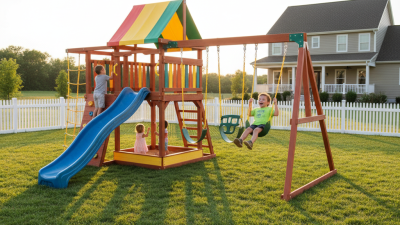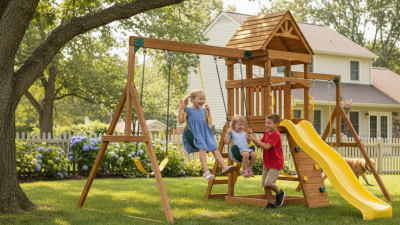
Choosing a childrens swing set in 2026 requires more than comparing colors, prices, and online ratings. The right choice begins with the children who will use it. Their ages, heights, confidence, and play habits all matter.
A toddler needs a low, supportive seat and secure harness. Older children may prefer belt swings, climbing walls, or a small platform. Measure the yard carefully. Leave clear space around every swing, slide, and climbing feature. Check the ground, too. Grass can hide stones, roots, or uneven soil. A level surface with suitable impact protection is usually more dependable.
Dr. Donna Thompson, a respected playground safety specialist, has said, “Supervision is the first line of defense.” That reminder still matters at home. Even a well-designed childrens swing set cannot replace attentive adults. Inspect bolts, chains, seats, anchors, and wooden surfaces before use. Small cracks can become serious problems after rain, frost, or strong sunlight.
Look for durable materials, smooth edges, stable anchoring, and clear age guidance. Check whether replacement parts are available. A cheap set may become expensive when one unavailable connector ends its useful life. Weather resistance also deserves attention. Metal can rust, while untreated wood may splinter or warp.
The perfect swing set does not exist. Families sometimes choose too many features and overlook daily maintenance. That mistake is understandable. A simpler set may offer better safety, easier supervision, and more enjoyable play. This guide will examine practical features, construction quality, installation needs, and long-term value before you buy.
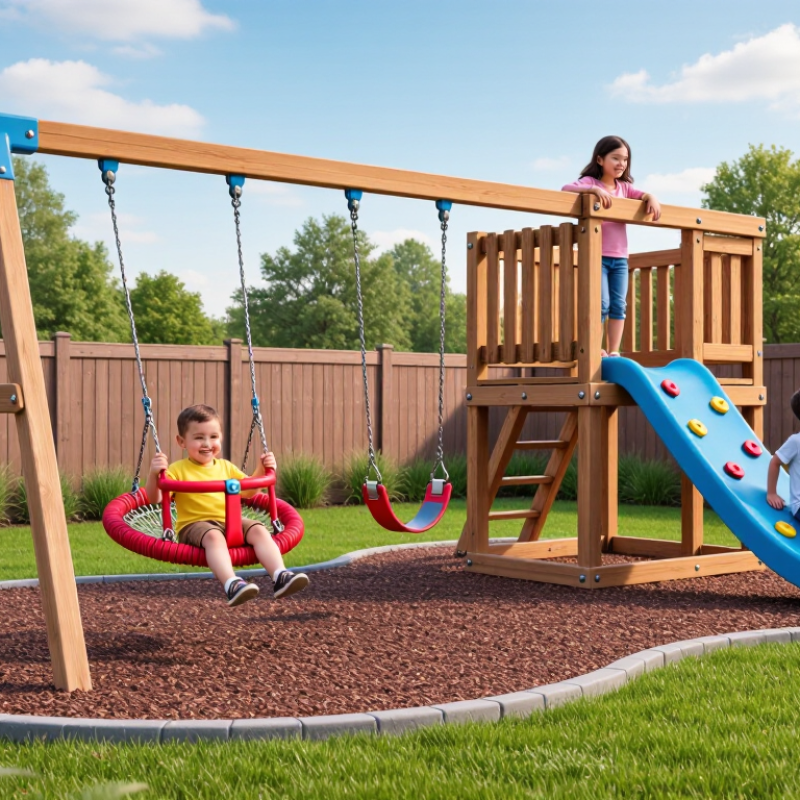
Choosing a children’s swing set in 2026 starts with your children, not a catalog. List their ages, heights, confidence, and preferred play. A toddler needs a low, supportive seat. Older children may want climbing, spinning, and stronger movement. Count regular users, including visiting children. Different ages can create conflicts around one swing set. Write it down. This takes five minutes.
Measure the usable area before comparing equipment. Mark the footprint with chalk, then add clear space around every side. Include swing travel in front of and behind the frame. Check overhead branches, fences, walls, raised edges, and drainage channels. Leave room for an adult to walk beside the structure. Soft, stable ground matters more than a perfect lawn. Grass can become hard after heavy rain. A level area helps, but slight slopes may need professional advice. Do not guess measurements. I once saw a spacious yard feel cramped because the swing arc was ignored.
Define daily needs honestly. Will children play independently, or will an adult supervise nearby? Do you need one seat or several? Consider shade, storage, noise, and seasonal weather. The safest location is visible from the home, yet away from a busy gate. Check published weight limits, installation instructions, and current local safety guidance. Use age recommendations as a starting point, not a substitute for judgment. Children’s abilities change quickly. Recheck bolts, anchors, surfacing, and wear regularly. A smaller set may serve better than an oversized one. That is not always obvious.
A swing set should match your yard, climate, and the children using it. Steel frames usually offer strong rigidity and slim profiles. Galvanized or powder-coated surfaces resist rust, but scratches can expose metal. Wood feels warmer and blends with gardens. It can split, rot, or loosen around fasteners. Recycled plastic components avoid splinters and need little painting. However, they may fade or become brittle in intense sunlight. No material is maintenance-free.
Design matters as much as material. Look for wide-set legs, stable anchors, soft-edged platforms, and enough spacing between swings. Belt seats suit younger children, while flat seats require better balance. A low climbing deck can be safer than a crowded tower.
Check the frame after rain, not only at purchase. Test for movement, sharp edges, exposed bolts, and trapped fingers. ASTM F1148 covers residential play equipment safety expectations. Compliance evidence is more useful than vague “safe” wording.
I once assumed thicker wood meant a safer set. That was too simple. Anchor depth, impact-absorbing surfacing, and adult visibility can matter more. Keep the swing zone clear, and follow installation instructions exactly. Children grow quickly, so review seat height and harness fit each season.
Age-appropriate equipment should guide your choice before color or design. A toddler may need a supported bucket seat, while an older child may safely use a flat belt seat. Read the age label carefully. Fit matters. The child’s feet should not drag, and small hands must grip the chains comfortably. Climbing walls, ladders, and slides should match the child’s coordination, not their wishes alone.
Weight limits require closer attention than many buyers expect. Check the limit for each swing, slide, platform, and climbing feature. Then calculate the combined weight of children using the structure at one time. Swinging creates movement, so a child who is close to the stated limit may need extra caution. Never treat the maximum number as a target. Read the installation instructions and keep the paperwork.
A safe setup needs a level surface, secure anchoring, and a clear fall zone. Place protective surfacing beneath and around active equipment. Inspect bolts, ropes, seats, and connection points regularly. Look for cracks, sharp edges, rust, and loose hardware. It is easy to assume a sturdy-looking frame is safe. That assumption can fail. Adult supervision should match the child’s age and behavior, especially during climbing or shared play. Recheck the equipment after rain, strong wind, or a move. Children grow quickly, so yesterday’s suitable seat may not fit next season.
Choosing a children’s swing set in 2026 means studying installation as carefully as design. A strong frame can still become unsafe when assembled on uneven ground. Measure the play area, including the full swing path and fall zone. Leave extra clearance around slides and climbing sections. Use level foundations and approved anchors suited to your soil. Loose soil may need deeper anchoring or a prepared base. Follow the assembly instructions exactly. Do not improvise missing bolts.
Installation quality affects durability. Tighten connections evenly, then recheck them after the first few weeks of use. I once assumed a slightly loose fitting was harmless. That assumption was wrong. Movement can enlarge holes and stress the frame. Keep a written inspection record. It helps reveal repeated problems that casual checks miss.
Maintenance should be simple enough for busy families. Inspect bolts, welds, ropes, seats, and anchor points monthly. Look for rust, splinters, cracked plastic, and faded surfaces. Replace damaged parts promptly. Clean standing water from recessed areas. Wooden sets need protection against moisture, while metal frames need careful rust control. Do not ignore small changes. Weather is often more damaging than heavy play. Every year, consider an experienced safety inspection, especially after severe storms or relocation. Durability is not just material strength; it depends on correct installation, regular care, and realistic expectations about sun, rain, and growing children.
| Swing Set Type | Typical Capacity | Typical Installation Time | Recommended Base and Anchoring | Routine Maintenance | Expected Service Life | Long-Term Durability | Best Use Case |
|---|---|---|---|---|---|---|---|
| Compact Metal Set | 2–4 children; approximately 50–250 lb total moving load | 4–8 hours for two adults; longer if concrete is required | Level ground with manufacturer-approved ground anchors; concrete may be required for some installations | Inspect bolts and welds monthly; check rust, swing seats, chains, and anchors; touch up damaged coating promptly | 8–15 years with proper corrosion control and sheltered placement | Good | Small yards, younger children, and buyers who want a relatively simple installation |
| Heavy-Duty Metal Set | 4–8 children; approximately 100–500 lb total moving load | 8–16 hours for two adults, excluding curing time for concrete | Compacted, level soil or concrete footings with secure anchors; verify underground utilities before digging | Monthly hardware inspection; seasonal rust checks; lubricate moving joints when recommended; inspect protective surfacing | 12–20 years in moderate climates; less in severe coastal or industrial environments without care | Very Good | Frequent use, multiple children, and families prioritizing structural strength |
| Pressure-Treated Wood Set | 4–8 children; approximately 100–500 lb total moving load | 10–20 hours for two adults; site leveling can add additional time | Level, well-drained ground; use approved post anchors or concrete footings while keeping wood from standing water | Inspect for rot, cracks, splinters, loose fasteners, and insect damage every 1–3 months; reseal or stain exposed surfaces as needed | 8–15 years, depending strongly on drainage, ventilation, coating, and local climate | Good with Regular Care | Larger yards where a natural appearance and integrated climbing features are important |
| Composite or Plastic Set | 2–5 children; approximately 50–300 lb total moving load | 4–10 hours for two adults, depending on the number of modules | Firm, level ground with approved anchors; avoid placement where water pools or where strong wind exposure is common | Wash surfaces periodically; inspect for UV brittleness, cracks, sharp edges, loose connectors, and fading | 7–12 years; shaded placement can reduce heat and ultraviolet aging | Moderate to Good | Younger children, low-maintenance households, and areas where splinters are a concern |
| Modular Mixed-Material Set | 4–10 children; approximately 100–650 lb total moving load | 12–24 hours for two adults; professional installation may be preferable | Engineered, level installation area with multiple anchors; protective surfacing should extend beyond every fall zone | Monthly safety inspection; check each material separately for rust, rot, UV damage, loose hardware, and worn moving parts | 10–18 years, depending on the least durable component and replacement-part availability | Very Good if Maintained | Families seeking slides, swings, climbing elements, and future expansion in one system |
| Commercial-Style Residential Set | 6–12 children; approximately 150–800 lb total moving load | 16–32 hours for two adults; site preparation and surfacing can substantially increase total time | Professionally leveled base, engineered anchoring, and impact-absorbing surfacing sized for the full fall area | Monthly documented inspection; tighten hardware, examine welds and connectors, replace worn parts, and maintain impact surfacing | 15–25 years when correctly installed and regularly inspected | Excellent | High-use households, community spaces, or buyers seeking the longest practical service life |
How to Choose a Children’s Swing Set in 2026?
Set a complete budget before comparing swing sets. Include delivery, assembly, anchoring, protective surfacing, and future repairs. The U.S. Consumer Product Safety Commission reports over 200,000 playground injuries receive emergency treatment annually. Falls cause about 79% of these injuries, according to its Public Playground Safety Handbook. Safety costs are not optional extras. They are part of the set.
A practical budget can reserve 20–30% for surfacing and installation. That percentage is my cautious planning estimate, not a fixed industry rule. Measure the yard first, leaving clear space around the frame and swing path. CPSC guidance recommends protective surfacing extending at least six feet around play equipment. Swing areas need additional space in front and behind. Check anchoring, pinch points, sharp edges, and weight limits against ASTM F1148, the standard for home playground equipment.
Choose features your children will use repeatedly, not the longest feature list. Younger children may need a low platform, enclosed openings, and easy-grip steps. Older children may value a taller slide or climbing wall. Age changes quickly. I would avoid spending heavily on accessories that may sit untouched next year. A cheaper set can become expensive when the ground shifts or hardware loosens. Inspect bolts monthly during the first season. Leave room in the budget for that reality.