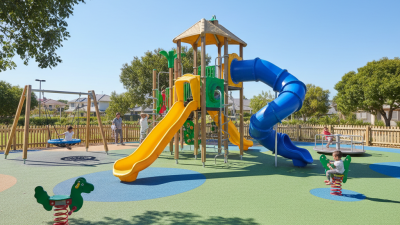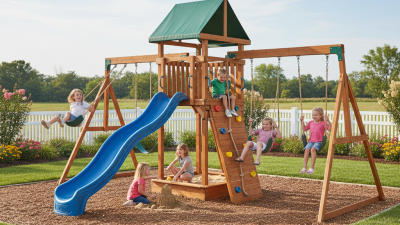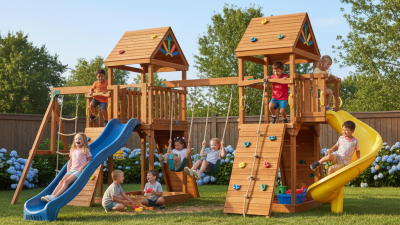
Choosing the China best play yard swing set for wholesale buyers requires more than comparing factory prices. It requires practical judgment, safety awareness, and a clear understanding of children’s daily play. A reliable set should feel stable under repeated movement, with smooth edges, firm connectors, and weather-resistant finishes. Wholesale buyers must also examine packaging, replacement parts, installation guidance, and supplier communication. Small details become expensive problems when hundreds of units reach schools, retailers, or community projects.
Dr. David Ball, a respected playground safety researcher, has stated, “There is no such thing as a completely safe playground.” His warning is useful for every purchasing team. A play yard swing set should reduce foreseeable risks, not promise impossible perfection. Buyers should review swing-seat design, frame strength, anchoring methods, spacing, and age suitability. Ask for test records and production samples. Visit the factory when possible. Photos can hide weak welds and uneven coatings.
China offers broad manufacturing experience and flexible wholesale options. However, not every attractive quotation represents dependable value. Some suppliers communicate well before payment, then respond slowly after delivery. That risk is real. A thoughtful sourcing process compares materials, quality controls, lead times, and after-sales support together. It also checks whether the product fits the intended climate and installation surface. The best choice may not be the cheapest unit. It should be the supplier that can repeatedly deliver safe, consistent, and serviceable equipment. This guide examines those factors closely, while recognizing that even careful buyers must continue asking better questions.
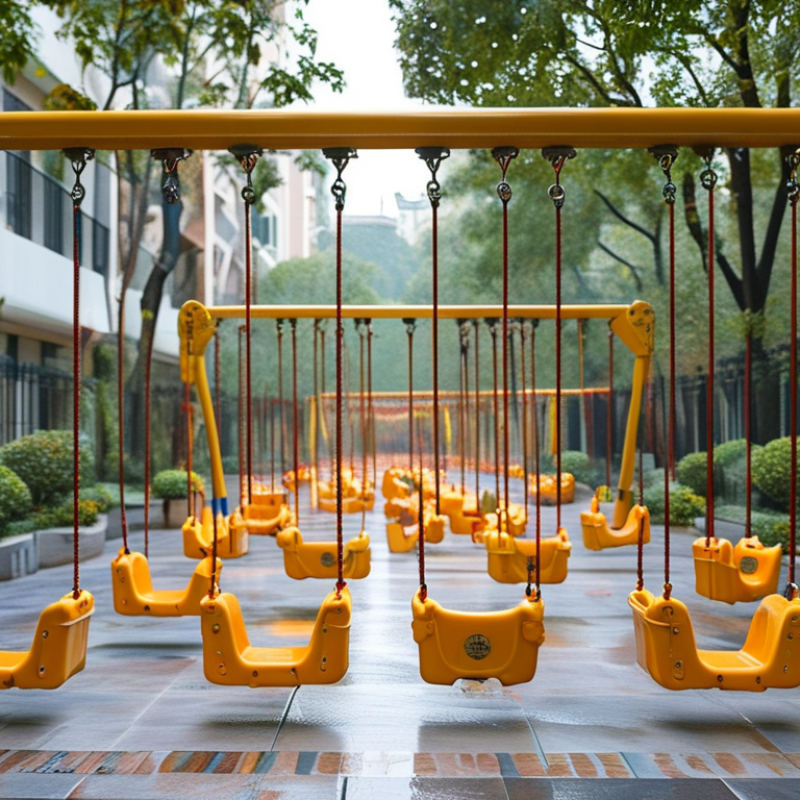
Play yard swing sets from China come in several practical types. Belt swings suit older children and active playgrounds. Bucket swings provide extra support for toddlers. Nest swings offer shared seating and calmer movement. Tire-style swings add a familiar, playful shape. Some suppliers also produce compact two-seat sets for gardens, schools, and community spaces.
Wholesale buyers should compare frame materials, swing-seat thickness, chain coating, and surface finishing. Galvanized steel frames resist outdoor moisture, while powder coating improves color and appearance. A safe design needs stable anchors, rounded edges, secure connectors, and suitable spacing. Ask for load tests, material details, inspection records, and sample assembly instructions. Factory photos help, but they are not enough. I have found that a physical sample often reveals small issues, such as awkward bolts or unclear labels.
Tips: Match each swing type with the children’s age range and expected use. Request packaging dimensions before ordering. Measure container space carefully. Check replacement-seat availability and installation support. Do not choose only by the lowest quotation. A cheaper frame may need earlier maintenance. Also, consider weather exposure, cleaning routines, and local safety requirements. A good specification sheet should state dimensions, weight limits, materials, and testing information clearly. Mistakes happen. Review every detail before confirming a wholesale order.
China Best Play Yard Swing Set for Wholesale Buyers?
Key Features of a High-Quality Wholesale Swing Set
A high-quality wholesale swing set needs more than bright colors and a low factory price. Its frame should use corrosion-resistant steel, secure welds, and stable ground anchors. A heavier frame is not automatically safer. Check load testing, balance, and installation instructions. The U.S. Consumer Product Safety Commission reports that falls cause about 79% of playground injuries. Therefore, buyers should request impact-absorbing surfacing guidance and a clearly measured fall zone. ASTM F1487 and EN 1176 references can also improve supplier evaluation.
Seat design deserves close attention. Look for smooth edges, UV-resistant materials, strong chains, and pinch-point protection. Drainage holes prevent trapped rainwater and freezing damage. During product inspections, I have seen attractive sets fail because replacement bolts were missing. That detail matters. Wholesale packaging should protect corners, include labeled hardware, and provide spare parts. Installation drawings must be practical, not decorative paperwork.
Tips: Ask for third-party test reports, material specifications, weight limits, and factory quality records. Compare samples under sunlight and repeated movement. Test it twice. Also inspect chain coatings and anchor plates. CPSC guidance recommends regular maintenance inspections, but many buyers underestimate this cost. Leave room for replacement seats, surfacing repairs, and local installation labor. The cheapest quotation may become expensive after delivery. Supplier communication can also be imperfect, so record every specification in the purchase contract.
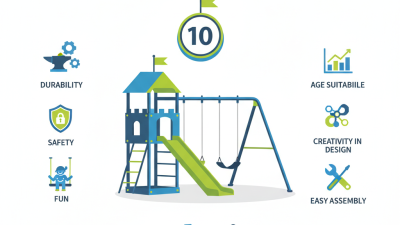
Wholesale buyers can use this 100-point evaluation model to compare swing sets by safety, durability, weather resistance, installation stability, and long-term serviceability.
How to read the chart: Safety documentation and structural durability receive the highest weighting because they directly affect user protection, product lifespan, and procurement risk. Weather resistance, secure anchoring, and replacement-part availability are also important for outdoor commercial use.
Evaluating a Chinese swing set manufacturer requires more than comparing export prices. A reliable buyer checks the factory behind the quotation. Ask for its production address, equipment list, worker training records, and recent quality documents. Photos help, but a live video inspection shows more. Look for steel cutting, welding, grinding, coating, assembly, and final packing in one traceable process. Small details matter.
Request a physical sample before placing a wholesale order. Measure tube thickness, platform height, anchor design, fastener quality, and swing-seat flexibility. Check sharp edges by hand, then inspect welds under bright light. The finish should feel even, not merely look attractive in catalog images. Ask how incoming materials are recorded and how rejected parts are isolated. Independent testing can support claims about load, durability, and destination-market requirements. Do not accept an impressive report without matching product details.
Capacity also needs evidence. Compare a trial order with the promised lead time, carton dimensions, spare-part policy, and pre-shipment inspection records. Ask who approves design changes. Communication is often the hidden quality test; vague answers may become costly delays. One weakness in this evaluation is relying too heavily on factory visits. A clean showroom cannot reveal every production problem. Recheck samples after mass production begins, even when the first shipment looks excellent. A changed weld or substituted fastener deserves a documented explanation.
China’s Best Play Yard Swing Set for Wholesale Buyers?
Wholesale buyers should assess safety before comparing prices or colorful designs. A reliable play yard swing set needs stable frames, rounded edges, secure fasteners, and controlled swing movement. Ask for material specifications, load testing records, and inspection reports from qualified laboratories. Verify that the equipment meets current safety requirements in the destination market, such as applicable ASTM or EN standards. Do not rely on a general compliance statement. Request the exact test scope, production date, and sample details.
Tips: Check welds, anchor points, seat ropes, and protective coatings during a factory visit. Ask whether the supplier performs repeated inspections after packaging. Packaging matters too. Bent tubes or missing hardware can create risks before installation. Keep spare bolts and clear assembly instructions for distributors.
Customization can support different markets and age groups. Buyers may request platform heights, seat styles, canopy colors, signage areas, or private-label packaging. However, every design change should receive a new safety review. A larger seat is not automatically safer. A lower platform may reduce falling height, but it can affect access and drainage. Share installation surfaces and climate conditions early. Coastal humidity, strong sunlight, and uneven ground require different material choices. In practice, some buyers focus too heavily on appearance. That is understandable, but it can hide weak anchoring or poor maintenance access. Test the final sample, not only the drawing.
| Evaluation Dimension | Wholesale Buyer Requirement | Recommended Specification or Data | Relevant Safety Reference | Verification Documents or Checks |
|---|---|---|---|---|
| Target Market | Confirm the destination market before production. | Prepare separate compliance specifications for the United States, European Union, United Kingdom, Australia, or other markets. | Requirements differ by jurisdiction and by residential or public-use installation. | Written compliance matrix, product drawings, risk assessment, and destination-market test plan. |
| Intended Use | Classify the product as residential or public-use equipment. | Residential backyard sets and commercial playground equipment should not be evaluated under the same requirements. | ASTM F1148 for residential play equipment; ASTM F1487 for public-use playground equipment. | Product classification on drawings, manuals, packaging, and test reports. |
| U.S. Residential Compliance | Required when selling residential play yards in the United States. | Evaluate the complete product, including frame, swing seats, suspension components, anchoring system, openings, and instructions. | 16 CFR Part 1220 and applicable CPSC requirements; ASTM F1148 is commonly used as a technical reference. | Third-party testing, component test records, age grading, warning labels, and assembly instructions. |
| European Residential Compliance | Required for activity toys intended for domestic use in European markets. | Assess mechanical strength, stability, entrapment risks, impact hazards, flammability, and user instructions. | EN 71-8 covers activity toys for domestic use, including certain swing and slide products. | EU-focused test report, technical file, warnings, traceability information, and conformity documentation. |
| Public-Use Equipment | Use higher-duty specifications for schools, parks, childcare centers, and hospitality venues. | Design for repeated daily use, vandal resistance, controlled access, durable surfacing, and professional installation. | ASTM F1487 in the United States; EN 1176 for public playground equipment in Europe. | Structural calculations, installation drawings, site inspection records, and public-use testing. |
| Age Grading | Match the structure, swing seats, access points, and warnings to the intended users. | Common commercial configurations separate younger children from older children; final age range must be supported by risk assessment and testing. | Applicable product standard and destination-market consumer product rules. | Age-grade rationale, labels, user manual, and packaging review. |
| Frame Material | Select material according to climate, expected load, maintenance plan, and price position. | Powder-coated steel for low-maintenance outdoor use; treated timber or engineered wood for a natural appearance; corrosion-resistant hardware for humid locations. | Material choice must support the applicable structural, corrosion, and surface-safety requirements. | Material certificates, coating or treatment specifications, corrosion evaluation, and sample inspection. |
| Swing Suspension | Prioritize smooth movement, secure connections, and resistance to wear. | Use enclosed or guarded connection points where appropriate; avoid sharp edges, exposed pinch points, and loose fasteners. | Applicable swing-equipment and playground-equipment safety requirements. | Static-load testing, fatigue or durability testing, connection inspection, and maintenance instructions. |
| Seat Options | Offer seat types suited to the age group and buyer channel. | Available configurations may include flat seats, belt seats, bucket seats, or adaptive seats, subject to applicable testing and age grading. | Destination-market playground or activity-toy standard and applicable accessibility requirements. | Seat material specification, attachment test, restraint review, and user instructions. |
| Stability and Anchoring | Prevent tipping, sliding, or movement during normal use. | Provide ground anchors suitable for soil conditions and installation type; anchor design should be included in the installation manual. | Applicable structural and playground-equipment stability requirements. | Stability calculations, pull-out testing where applicable, anchor drawings, and site-installation checklist. |
| Fall Height and Surfacing | Specify impact-attenuating surfacing based on the maximum fall height. | Use engineered wood fiber, rubber surfacing, sand, or another compliant material; the required depth depends on the product, fall height, and local standard. | CPSC Public Playground Safety Handbook and applicable ASTM or EN surfacing requirements. | Critical fall-height calculation, impact-attenuation test, drainage plan, and maintenance schedule. |
| Use Zone | Reserve clear space around the structure and moving swing paths. | A common CPSC recommendation is a minimum 6-foot protective use zone around playground equipment; swing zones require additional front-and-back clearance based on swing geometry. | CPSC Public Playground Safety Handbook; final dimensions depend on the applicable standard and equipment layout. | Scaled site plan, use-zone drawing, installation instructions, and warning signage. |
| Entrapment and Pinch-Point Control | Eliminate openings and moving interfaces that may trap fingers, limbs, head, or torso. | Review partially enclosed openings, gaps between moving parts, platform transitions, and areas accessible during swinging. | Applicable ASTM, EN, CPSC, and destination-market entrapment provisions. | Probe testing, design-risk assessment, prototype inspection, and corrective-action records. |
| Surface Safety | Protect children from cuts, impact injuries, burns, and snagging hazards. | Round exposed edges, cover welds where necessary, remove burrs, and use UV-resistant surfaces for outdoor products. | Applicable product-safety standard and consumer-product requirements. | Visual inspection, edge-radius review, coating adhesion check, UV or weathering evaluation, and sample approval. |
| Customization Options | Differentiate the product for retailers, distributors, schools, and project buyers. | Possible options include frame color, seat type, platform configuration, slide attachment, canopy, ladder, climbing wall, anchor kit, packaging language, and instruction format. | Every customized configuration should be reviewed against the applicable safety standard before mass production. | Approved technical drawing, golden sample, change-control record, updated test report, and packaging proof. |
| Packaging and Logistics | Reduce shipping damage, warehouse space, and assembly complaints. | Use knock-down packaging, protected metal edges, labeled hardware bags, carton drop testing, and palletization suitable for container loading. | Packaging and transport specifications agreed between buyer and supplier. | Packing list, carton dimensions, gross and net weight, drop-test record, loading plan, and spare-parts list. |
| Quality-Control Plan | Maintain consistent quality across repeat wholesale orders. | Use incoming-material inspection, first-article approval, in-process checks, final visual inspection, hardware verification, and random carton inspection. | Buyer-approved quality plan and applicable product-safety requirements. | Inspection checklist, batch records, nonconformance report, corrective-action report, and pre-shipment inspection. |
| Documentation Package | Require complete documentation before shipment and resale. | Include technical drawings, assembly manual, maintenance instructions, warnings, spare-parts list, test reports, and traceability information. | Documentation content depends on the destination market and product classification. | Document review against the purchase order, approved sample, and current regulatory requirements. |
Note: Safety standards and regulatory requirements can change by market, product classification, installation location, and revision date. Buyers should confirm the applicable current edition and obtain testing for the exact final configuration before commercial sale.
Wholesale pricing depends on more than the factory quotation. Buyers should request a clear breakdown for frames, seats, fasteners, packaging, and inspection fees. A low unit price can hide expensive replacement parts. Confirm the minimum order quantity and payment terms before negotiating further. Ask for a pre-production sample. It reveals uncomfortable details early. During quality checks, inspect welds, coating thickness, bolt alignment, and moving joints. Measure the swing seat spacing with actual tools, not only photographs. Load testing should reflect children’s repeated use, not a single demonstration. Review material certificates and age-related safety documentation from reliable testing laboratories.
Shipping needs equal attention. A packed swing set may occupy more container space than expected. Request carton dimensions, gross weight, and a loading plan. Compare factory pickup, port charges, freight, insurance, and destination handling costs. Clarify whether the quotation uses FOB, CIF, or another agreed term. Wooden crates and reinforced cartons can reduce transit damage, but they also increase freight weight. We once underestimated corner protection, and several cartons arrived with crushed edges. That mistake was preventable. Buyers should approve packaging photos and a final inspection report before shipment. Keep spare fasteners in each carton, with a simple installation guide and labeled hardware bags. Small details matter.