Top 10 Playground Equipment Types for Global Buyers?
Choosing playground equipment for an international project involves more than colorful designs and attractive catalog prices. Global buyers must assess safety, durability, accessibility, installation, maintenance, and climate performance together. A coastal school may need corrosion-resistant steel, while a desert resort needs UV-stable plastics and shaded platforms. These details often decide whether a playground serves children for years or becomes an expensive repair project. Real project experience shows that the best option depends on age groups, site conditions, supervision, and local expectations. There is no universal winner.
This guide examines ten widely purchased playground equipment types, including slides, swings, climbing structures, inclusive systems, and interactive play panels. Each category is considered through practical buying questions. What skills does it support? How much space does it require? Can staff inspect it easily? Are replacement parts available? Buyers should review manufacturer testing, installation guidance, material specifications, warranty terms, and relevant regional safety requirements. Independent inspection may be valuable before opening, especially when equipment is installed across borders. Product photographs can mislead.
Reliable decisions come from comparing evidence, not simply choosing the largest structure or lowest quotation. The guide also recognizes a common weakness in procurement: budgets are often set before risks are understood. That approach deserves reconsideration. A smaller, well-shaded layout may serve children better than a crowded centerpiece. With careful evaluation, global buyers can select playground equipment that is safe, engaging, maintainable, and appropriate for its community. The final choice should remain practical. Children notice quality quickly.
Playground Equipment: Definition, Purpose, and Main Categories
Playground equipment is purpose-built outdoor furniture that invites children to move, explore, imagine, and interact. It includes structures, ground games, sensory features, shade, seating, and accessible routes. For global buyers, the right category depends on age, space, climate, maintenance skills, and local safety requirements.
Main categories include active equipment, such as swings, slides, climbers, balance beams, and rotating units. Imaginative equipment includes playhouses, role-play panels, and themed structures. Sensory and social equipment may feature music panels, sand tables, water channels, and group seating. Inclusive equipment supports varied physical and sensory abilities through ramps, transfer platforms, quiet zones, and ground-level activities. That distinction is easy to miss.
Purpose matters more than appearance. The WHO’s 2022 Global Status Report on Physical Activity estimates that 80% of adolescents do not meet recommended activity levels. Well-designed play spaces can encourage daily movement without feeling like exercise. The U.S. Consumer Product Safety Commission reports that playground injuries send more than 200,000 children to emergency departments annually, with falls accounting for about 79% of cases. Safety is not a decorative feature.
Buyers should compare fall zones, impact-absorbing surfacing, entrapment risks, corrosion resistance, and inspection access. A tall climber may attract attention, yet it can demand costly surfacing and frequent checks. Local standards also differ, so one universal specification may be convenient but incomplete. More equipment is not always better. 恒一
Slides, Climbers, and Towers: Core Structures for Active Play
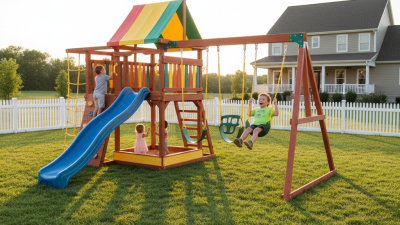
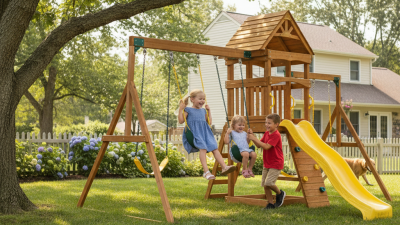
Slides, climbers, and towers form the active center of many playgrounds. For global buyers, these structures should support movement, confidence, and repeated exploration. A well-designed slide offers a smooth transition from climbing to landing. Its platform needs secure guardrails, rounded edges, and enough space for children to exit safely.
Climbers can include nets, ladders, steps, or angled walls. Different routes encourage children to choose their own challenge. Towers connect these elements and create height, visibility, and imaginative play. However, taller is not always better. Buyers should check fall zones, impact-absorbing surfacing, drainage, UV resistance, and corrosion protection. Materials may perform differently in coastal, tropical, or cold environments. Local safety requirements also need verification before installation. An experienced supplier should provide load information, maintenance guidance, and inspection documents. I have seen attractive structures fail in practice because cleaning access was ignored. That detail matters.
Tips:
Match the equipment to the site, climate, and children’s age range. Measure the complete use zone, not only the equipment footprint. Ask for replacement-part availability and clear assembly instructions. Test whether adults can reach difficult areas during supervision. Include accessible routes where possible, but avoid treating accessibility as an afterthought. Small oversights become expensive later. One more thought: bright colors attract attention, yet thoughtful layout usually keeps children engaged longer.
Swings, Seesaws, and Spinners: Movement-Based Equipment Types
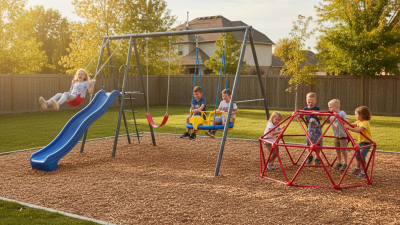
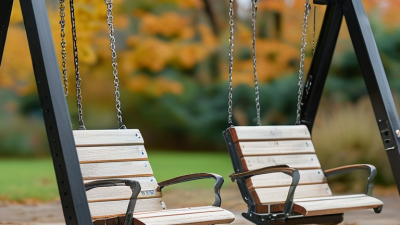
Swings, seesaws, and spinners turn simple playground space into active movement zones. Each type supports balance, coordination, and social play in a different way. Swings need strong overhead structures, secure seats, and generous clearance at the front and rear. I have seen layouts fail because designers measured the frame, not the full swing path. That small oversight can create crowded, unsafe circulation.
Seesaws require controlled movement and comfortable handgrips. Soft-stop systems can reduce sudden impact, especially when children have different weights. The central pivot should resist pinching and remain easy to inspect. Spinners add rotation and excitement, but their platforms need stable footing and suitable speed control. Clear entry and exit areas matter. Children often leave moving equipment faster than expected.
For global buyers, material choice deserves close attention. Powder-coated metal can suit busy sites, while treated timber may need more frequent inspection in wet climates. Drainage, ultraviolet exposure, salt air, and replacement-part access can change long-term costs. Ask suppliers for load ratings, installation drawings, maintenance schedules, and test documentation. Check these details against local safety requirements, not only a general catalogue description. A polished product can still have weak instructions. That deserves questioning. Supervisors should inspect bolts, joints, surfaces, and ground conditions regularly. Children’s play patterns also change, so the layout may need adjustment after installation.
Sand, Water, and Imaginative Play Areas for Diverse Age Groups
Top 10 Playground Equipment Types for Global Buyers: Sand, Water, and Imaginative Play Areas
Sand and water play areas support sensory learning across several age groups. Toddlers can scoop, pour, and compare textures. Older children can build channels, dams, and small story worlds. The World Health Organization recommends at least 60 minutes of moderate-to-vigorous activity daily for children and adolescents. These zones encourage movement without making exercise feel forced.
Design details matter. Use shallow water tables, rounded sand tools, shaded seating, and clear sightlines for caregivers. Separate wet and dry surfaces to reduce slipping risks. The U.S. Consumer Product Safety Commission’s Public Playground Safety Handbook reports over 200,000 annual emergency-department injuries linked to playground equipment. Falls account for most reported cases. A dry surface is not automatically safer. Drainage, impact-absorbing ground, and routine inspections still require attention.
Imaginative areas can include playhouses, market stalls, tunnels, and loose-part construction spaces. Keep pretend kitchens away from standing water. Provide quieter corners for children who need less stimulation. Inclusive access should include firm routes and reachable play features, not only ramps. Global buyers should check local climate, water quality rules, accessibility requirements, and maintenance skills before purchasing. I would not assume one layout suits every culture. Children may invent uses adults never planned. That is useful, but supervision and flexible design must allow for it.
Top Playground Equipment Types for Global Buyers
Common age-group coverage for sand, water, imaginative, and active play areas
This planning matrix uses the two principal age groups referenced in the U.S. CPSC Public Playground Safety Handbook: preschool children aged 2–5 and school-age children aged 5–12. A value of 1 indicates that the equipment type is commonly planned for that age group; final suitability depends on equipment dimensions, supervision, accessibility, and local safety standards.
Reference: U.S. Consumer Product Safety Commission, Public Playground Safety Handbook, CPSC Publication 325.