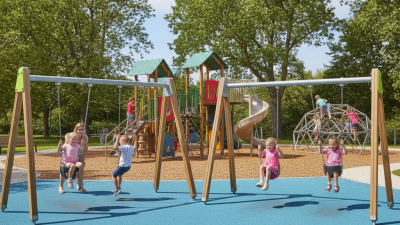
What Is an Outdoor Play Set?
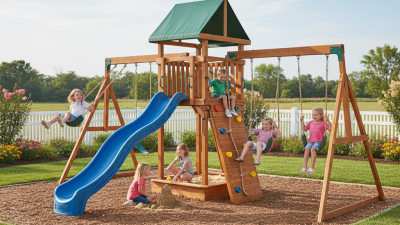
An outdoor play set is a group of play features installed outside, usually in a backyard or shared play area. It may include a platform, swings, a slide, climbing grips, or a small bridge. The exact mix depends on children’s ages, available space, and how adults plan to supervise. Some sets are compact. Others need a larger, level area and careful assembly.
A useful perspective comes from pediatrician and play researcher Dr. Michael Yogman, lead author of an American Academy of Pediatrics report on play. He wrote, “Play is not frivolous: it enhances brain structure and function and promotes executive function.” That insight helps explain why an outdoor play set is more than equipment: it can invite movement, imaginative games, and shared play. But no structure guarantees those benefits. Children still need room to make choices, and adults need to check the equipment and play surface regularly.
The details matter. A swing needs clear space around it; a slide needs a safe exit area. Age guidance, sturdy installation, and suitable surfacing deserve attention before children climb. Even a well-built set can feel too ambitious for a small yard—or too limited as children grow. That is worth admitting. The right outdoor play set is not necessarily the largest or most elaborate; it is one that fits the site, the children, and everyday family routines. This guide explains what these sets include, how their features differ, and what to consider before choosing one.
Definition and Core Components of a Residential Outdoor Play Set
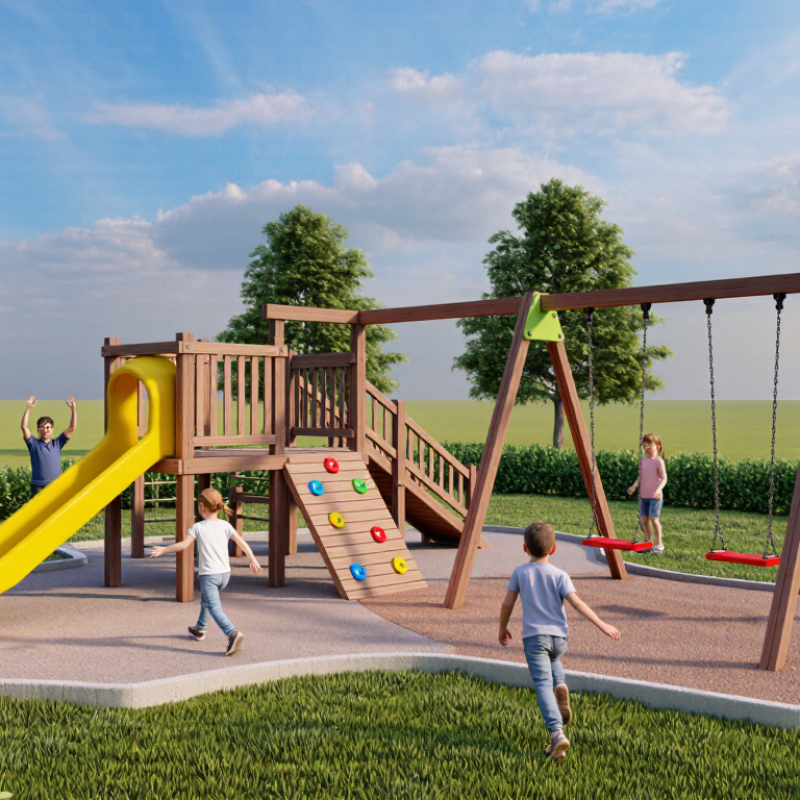
A residential outdoor play set is a fixed home-play structure designed for activities such as climbing, sliding, and swinging. Its core components usually include a supporting frame, an elevated deck, access steps or a ladder, and one or more play features. Guardrails help protect raised platforms, while anchors keep the structure stable in soil. The ground beneath it matters too. A suitable impact-absorbing surface can reduce injury severity after falls; grass may look soft, but it can become hard when dry or compacted. Small details matter.
ASTM International’s F1148 standard covers safety and performance for residential playground equipment. It offers useful criteria for evaluating a set’s design, though no standard replaces careful installation and regular checks. The U.S. Consumer Product Safety Commission’s playground-equipment injury estimates have placed annual emergency-department visits near 200,000. That figure covers playground equipment broadly, not residential sets alone. It is a reminder that equipment height, surfacing, and upkeep deserve attention. A loose bolt is easy to miss. So is a worn swing connector. Measure the available yard space, check the manufacturer’s stated age range, and leave clear landing zones around moving parts. A tidy layout is helpful, but real yards are rarely perfect.
Common Designs: Swings, Slides, Climbers, and Combination Sets
Outdoor play sets bring several kinds of movement into one backyard space. Their designs range from a simple swing frame to a larger structure with platforms and ladders. The right layout depends on children’s ages, available space, and how they like to play.
Swings encourage repeated motion and help children practice balance. A secure seat should fit the child using it, while the frame needs stable ground and room for a clear swing path. Slides add a quick climb-and-descent routine. Check that the platform has a safe entry point and that the landing area stays clear of toys, stones, and hard edges. Small details matter.
Climbers may use steps, ladders, or low walls with handholds. They offer varied routes, though some children need time to judge each foothold. Combination sets join swings, slides, and climbing features around one frame, saving yard space and supporting different play styles. Still, more features are not automatically better. A crowded platform can make movement awkward, and it can be tempting to choose equipment that looks impressive instead of what children will use. Measure the space, consider supervision, and check each feature’s age guidance before deciding.
What Is an Outdoor Play Set? - Common Designs: Swings, Slides, Climbers, and Combination Sets
| Design Type |
Typical Components |
Common Play Activities |
Space and Layout Considerations |
Key Selection Notes |
| Swing Set |
A support frame with one or more suspended seats; some designs include toddler-style seats or a glider. |
Swinging, taking turns, and developing balance and coordination. |
Needs clear space in front of and behind each swing, as well as room around the frame. Check the product instructions for the required use zone. |
Choose seats suited to the children using them, and check that the frame and anchors are designed for outdoor use. |
| Slide Set |
A slide attached to a platform, ladder, or steps; some models have a small play deck or access ramp. |
Climbing to the platform, sliding, and imaginative play around the structure. |
Allow unobstructed space at the slide exit and along access points. Place the structure on a level area with appropriate impact-absorbing surfacing. |
Platform height, access method, and slide design should match the manufacturer’s stated age and use guidance. |
| Climber |
May include climbing walls, ladders, ropes, overhead bars, or net elements, depending on the design. |
Climbing, hanging, traversing, and practicing strength and coordination. |
Requires clear fall space around climbing surfaces and overhead elements. Check the installation instructions for surfacing and clearance requirements. |
Consider grip size, access difficulty, maximum user limits, and whether the design is appropriate for the children’s abilities. |
| Combination Set |
Combines two or more features, commonly a platform, slide, swings, and climbing access; layouts vary by model. |
A mix of swinging, sliding, climbing, and imaginative play, often with several play stations. |
Usually needs more overall yard space and careful placement so play zones do not overlap. Account for access, exits, and required clearances. |
Compare the complete footprint, installation needs, maintenance requirements, and age guidance for each included feature. |
Safety note: Install and maintain the play set according to its manufacturer’s instructions. Use appropriate impact-absorbing surfacing, inspect equipment regularly, and supervise children during play.
Safety Benchmark: ASTM F1148 for Home Playground Equipment
An outdoor play set is a residential structure for climbing, sliding, swinging, or imaginative play. For home playground equipment, ASTM F1148 is an important safety benchmark. It is a voluntary consensus standard, not a guarantee that every installation is safe. Its requirements address equipment design and performance, including hazards such as unstable structures, sharp edges, and openings that could trap a child.
Check product documentation for a clear statement of conformity to the applicable edition of ASTM F1148. Ask for supporting test information when details are unclear. A vague safety claim is not the same as evidence. Small details matter. The standard applies to equipment, while safe use also depends on correct assembly, suitable placement, and regular care.
Set the structure on level ground and follow the installation instructions closely. Use the recommended anchors and protective surfacing; grass can look soft but may not cushion a fall reliably. Keep the area free of rocks, exposed roots, and hard objects. Inspect ropes, chains, bolts, and plastic parts for wear or movement. Even a careful inspection can miss a loose fastener, so check again after heavy rain or frequent use. Safety takes attention, and sometimes the instructions still leave questions worth asking.
What Is an Outdoor Play Set? — Safety Benchmark: ASTM F1148
Age-group ranges commonly used in playground safety guidance
ASTM F1148 is a consumer safety performance standard for home playground equipment. The chart shows age-group ranges in CPSC playground guidance; it is context for choosing age-appropriate equipment, not a set of age limits specified by ASTM F1148. Always follow the equipment manufacturer’s age and safety instructions.
Protective Surfacing: CPSC Guidance Calls for a 6-Foot Fall Zone
An outdoor play set is more than a frame with swings and a slide. Its fall zone—the clear, cushioned area around equipment—is part of the play space. The U.S. Consumer Product Safety Commission’s Public Playground Safety Handbook recommends protective surfacing extending at least six feet in every direction from stationary equipment. For swings, the zone should extend farther at the front and back: twice the height of the swing’s pivot point. Measure from the equipment’s outer edge, not from the spot where a child usually lands. Small measuring mistakes matter.
The surface itself matters, too. ASTM International’s F1292 standard evaluates how well playground surfacing absorbs impact, using limits of 200 for peak impact acceleration (G-max) and 1,000 for Head Injury Criterion (HIC). Loose-fill materials can shift, compact, or wash away, leaving hard ground exposed beneath a landing area. Look closely around posts, under swing paths, and at the bottom of slides. Keep the required zone clear of fences, tree roots, and toys. A neat-looking surface is not proof of impact performance; check its rated use and maintain it as directed. That can feel fussy. Still, a six-foot zone is only useful when the whole area stays protective.
Swing Layout: Extend the Surfacing Zone Twice the Bar’s Height in Front and Back
What Is an Outdoor Play Set?
Swing Layout: Extend the Surfacing Zone Twice the Bar’s Height in Front and Back
An outdoor play set combines equipment such as swings, slides, and climbing features in one play area. For a swing, the space below and around it matters as much as the frame. A useful planning rule is to extend the protective surfacing zone forward and backward by twice the height of the swing bar. If the bar is 2.4 metres high, plan for about 4.8 metres in each direction from the area directly below its pivot. The moving seat needs room to travel and land without reaching a fence, tree, or hard path.
Measure carefully. A tape measure and a clear sketch can reveal how much space the swing actually needs. Keep the surfacing even and suitable for the equipment, and check the play set’s instructions for exact distances and material requirements. Guidance can differ by design and location, so don’t treat the twice-height rule as the only check. It’s easy to overlook side clearance, too. I’d recheck the layout after installation, since the frame may sit differently than expected.
Tips: Mark the full front-and-back zone with string before digging. Check for roots, drains, and walkways. Leave the swing path clear.