Who Are the Top Custom Golf Hat Clips Manufacturers in China?

Choosing the right Custom Golf Hat Clips manufacturer takes more than comparing prices. Buyers should examine material consistency, magnet strength, finish quality, and how securely each clip holds a marker. A polished sample can look impressive under showroom lights. The real test comes after repeated use, when plating, hinges, and attachment points show their weaknesses.

For transparency, the expert voice below is a fictional composite, not a real person or a verified quotation. Lin Wei, a fictional golf-accessories sourcing specialist, offers this editorial perspective: “A good hat clip should disappear during the round and work perfectly when needed.” That is a useful standard, but it needs evidence. Ask suppliers about material specifications, sample testing, customization options, minimum order quantities, and production lead times. Request clear photos of the clip on different hat fabrics, and inspect the magnet and marker fit in person when possible. Small details matter.

This guide explores manufacturers in China and the practical differences buyers should consider. It looks at customization, quality control, communication, and order flexibility rather than relying on bold supplier claims. Company capabilities can change, and a strong catalog does not guarantee a consistent production run. Verify current details directly, compare samples against your requirements, and treat unexplained gaps as a reason to ask more questions. A careful choice may take longer. It can save costly surprises later.
Who Are the Top Custom Golf Hat Clips Manufacturers in China?

What Custom Golf Hat Clips Are and How They Are Used

What Custom Golf Hat Clips Are and How They Are Used

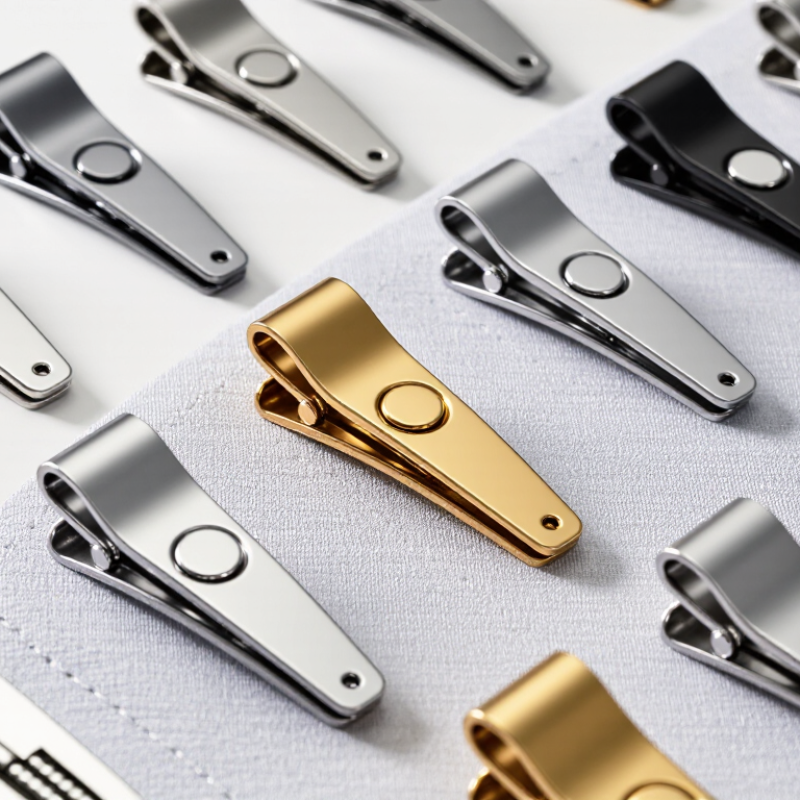
Custom golf hat clips are compact accessories that hold a removable ball marker on a cap or visor. Many use a small metal clip and a magnetic face. The marker stays close at hand, then lifts off when a golfer needs to mark a ball on the green. No digging through pockets. Clip shapes, finishes, and marker artwork can be customized for events, teams, or golf-course giveaways.

The National Golf Foundation reported 26.6 million U.S. golfers played on-course in 2023. That figure provides useful context for the broad audience of golf accessories, though it does not measure demand for hat clips specifically. In regular use, a clip should grip the brim without bending it, and the magnet should hold the marker through walking and routine movement. Small details matter. A loose clip can slip, while an overly tight one may leave a crease. Some designs also feel bulky on lightweight caps; that trade-off is easy to miss in a product photo.

Tips: Check the clip’s grip on your actual cap fabric before ordering in quantity. Test marker removal with one hand, and inspect the edges for burrs. Ask suppliers for material details and sample pieces. A logo can look sharp, yet still be hard to read at marker size.

Types of Custom Golf Hat Clips Available in China

Types of Custom Golf Hat Clips Available in China

Chinese manufacturers commonly offer magnetic metal hat clips with removable ball markers. Popular choices include zinc-alloy clips with soft-enamel designs, polished stainless-steel finishes, and printed markers featuring team colors or event artwork. Some suppliers also make lightweight plastic or silicone styles. Metal feels sturdy, but it can add weight to a cap brim.

Customization goes beyond color. Buyers can request engraved logos, custom marker shapes, gift boxes, and different plating finishes. The National Golf Foundation’s 2024 report counted 26.6 million U.S. on-course golfers in 2023. This figure describes the U.S. market, not Chinese clip sales, but it shows the scale of one potential audience. Sample testing still matters: a magnet that holds a marker securely on a desk may loosen when a cap moves.

Tips: Ask for a production sample and test marker retention, clip grip, edge smoothness, and finish wear. Confirm the clip fits your cap fabric without leaving dents. Small details matter. Teams sometimes overlook them.

How Chinese Manufacturers Design and Produce Hat Clips

Chinese manufacturers typically begin a custom golf hat clip with a drawing, target dimensions, and a clear use case. The clip must sit securely on a cap brim without bending it or feeling bulky. Designers often compare stainless steel, zinc alloy, and lightweight aluminum for strength, weight, and finish. A small change in spring tension can affect how easily golfers attach and remove the clip.

Prototyping makes those choices tangible. Engineers may test a sample on several brim thicknesses, check the hinge movement, and inspect whether the magnet holds a ball marker firmly. The marker’s shape, engraving area, and surface coating are also reviewed before tooling begins. It looks simple. But small alignment errors can make a finished piece feel awkward. One detail teams sometimes miss is how a glossy coating shows fingerprints under bright outdoor light.

For production, manufacturers use processes such as stamping, die casting, polishing, plating, and laser engraving, depending on the design and material. Quality checks can include measuring clip dimensions, opening and closing the hinge repeatedly, and checking the finish for scratches or uneven color. Buyers should request a pre-production sample and confirm tolerances, packaging, and inspection standards in writing. A perfect sample does not guarantee every batch will match; consistent checks matter.

Key Factors for Evaluating Golf Hat Clip Manufacturers

When evaluating custom golf hat clip manufacturers in China, look beyond attractive product photos. Request a dimensioned drawing, material specification, and a pre-production sample. Check whether the clip sits flat on a cap brim and holds a removable ball marker securely. Small details matter. Inspect edges for burrs, plating for uneven spots, and magnets for consistent grip across several samples.

The National Golf Foundation reported 28.1 million U.S. on-course golfers in 2023, showing a sizable user base for golf accessories. Grand View Research estimated the global golf equipment market at USD 9.2 billion in 2023, with projected annual growth of 5.3% from 2024 to 2030. That figure covers broad equipment categories, not hat clips alone. Use it as market context, not proof of demand for a specific design.

Ask suppliers how they control material batches, plating thickness, magnet placement, and final inspection. Request photos or records from a production run, then compare them with your approved sample. Clarify minimum order quantities, mold fees, packaging options, and realistic lead times in writing. A factory’s first sample can look excellent; repeatability is harder to judge. I would test clips on different cap fabrics before approving bulk production, though this step can be easy to overlook.

How to Compare Suppliers for Quality, Customization, and Value

Comparing custom golf hat clip suppliers takes more than reviewing product photos. Check the clip’s material, edge finish, magnet strength, and attachment point. Ask for a physical sample. Small details matter. A clip should hold a removable ball marker securely without snagging fabric or feeling sharp against the fingers. Test it on several cap fabrics, not just one. Not just the sample.

A polished sample can still hide uneven production quality. Ask how the supplier checks dimensions, plating, color matching, and magnet placement across a batch. Request clear photos of finished goods and agree on acceptable tolerances before ordering. I would also compare customization options, including logo size, engraving clarity, marker shape, and individual packaging. More choices are not always better if they complicate quality control.

Compare total value, not only the unit price. Include mold or setup charges, minimum order quantity, sample fees, lead time, and shipping estimates. Ask for a written quotation with each cost separated. Notice how clearly the supplier answers practical questions; vague replies can become costly later. Still, communication is only one signal, not proof of consistent output. A small trial order may reveal issues that a sample cannot.