Choosing the right vinyl backyard playsets involves more than comparing colors, prices, and attractive photographs. A safe, practical choice should fit your yard, children’s ages, and everyday routines. Measure the available space first, including room for swings, slides, and safe landing zones. A beautiful playset can still feel cramped when placed beside a fence or patio.
Vinyl is popular because it resists splinters, moisture, and frequent cleaning. However, quality varies between manufacturers. Look for sturdy frames, secure hardware, rounded edges, and clear weight recommendations. Check whether the vinyl covers treated wood or forms the entire structure. Ask about UV protection, warranty coverage, replacement parts, and installation support. These details often reveal more than a polished product description.
Safety deserves regular attention after installation. Inspect bolts, anchors, swing chains, and slide connections every few weeks. Watch for fading, cracks, loose fittings, or water collecting near the base. Follow the manufacturer’s instructions and local playground guidance. Experience has taught many homeowners that installation quality matters as much as the playset itself. I would not assume a higher price guarantees better construction. That assumption can be expensive. Compare materials, customer feedback, safety documentation, and maintenance demands together. The best vinyl backyard playsets should provide enjoyable movement while remaining stable, manageable, and suitable for your family’s outdoor space. (226 words)
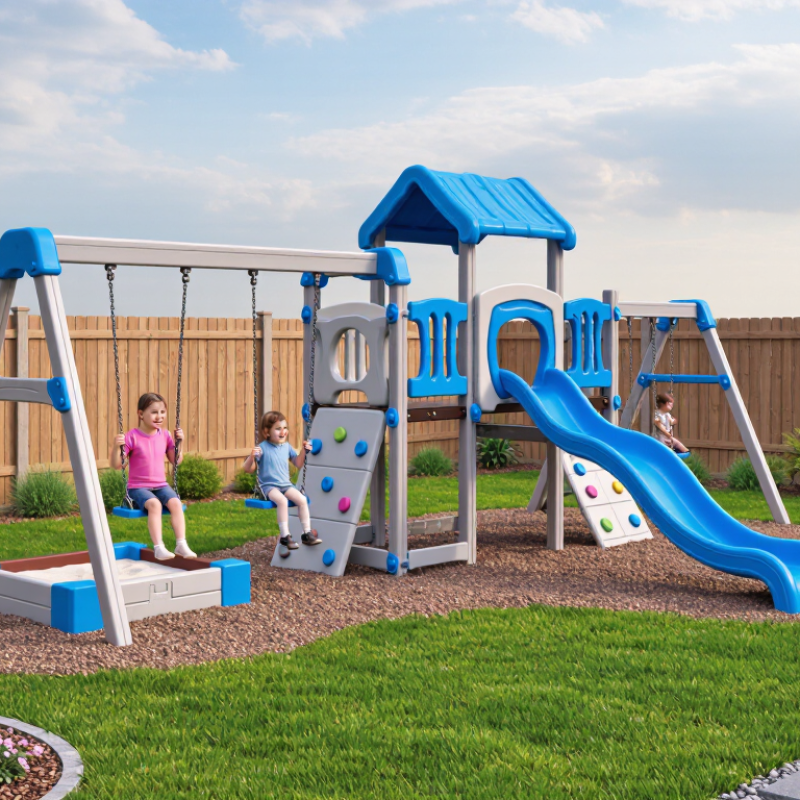
Choosing a vinyl backyard playset should begin with your children, not color or catalog photos. Record each child’s age, height, confidence, and favorite movement: climbing, sliding, swinging, or imaginative play. An older child may outgrow a small platform quickly, while a toddler needs lower steps and secure barriers. Count daily users. The U.S. Consumer Product Safety Commission reports that playground injuries send more than 200,000 children to emergency departments each year. Falls cause many of these cases.
Tips: Measure the usable yard, not the property line. Mark fences, trees, drainage channels, doors, and overhead branches. Leave clear access for supervision and maintenance. CPSC’s Public Playground Safety Handbook recommends protective surfacing and a six-foot use zone around many play structures. Swing clearance usually extends about twice the pivot height in front and behind the seats. Draw the layout with tape first. It is surprisingly revealing.
Vinyl can resist moisture and simplify cleaning, but it does not remove safety concerns. Check the structure’s age range, platform height, guardrails, hardware, and surface temperature during direct sunlight. Look for documentation aligned with relevant ASTM playground standards, and inspect fasteners after installation. A shaded corner may improve comfort, yet dense shade can keep surfaces damp. I once underestimated how much room supervision requires; a technically fitting set still felt cramped beside a patio. Leave space for running, repair access, and the family’s changing needs.
Choosing the best vinyl backyard playset starts with material evidence, not color or shine. Look for outdoor-grade PVC with UV stabilizers and consistent wall thickness. ASTM D1784 classifies PVC compounds by strength and heat performance. Ask for the compound grade and test results. A smooth panel may still become brittle after years of sunlight. I would not trust appearance alone.
Weather resistance deserves a practical test. ASTM G154 accelerated UV testing can reveal fading, cracking, and chalking before installation. However, laboratory exposure cannot perfectly copy your climate. Coastal salt, freezing water, and daily heat cycles may create different failures. Check joints, caps, and drainage points carefully.
The U.S. Consumer Product Safety Commission estimates roughly 205,000 playground-related emergency injuries among children annually in recent reporting periods. Strong materials matter, but installation and maintenance matter too (CPSC, Playground Equipment-Related Injuries and Deaths).
Tips: Request UV-aging data, impact testing, and warranty limits. Compare results under ASTM methods, not vague claims. Press exposed edges gently; sharp, thin, or powdery areas deserve questions. Inspect the set each season, especially after storms. Do not ignore small cracks. They often grow quietly.
Painted-looking vinyl can fade unevenly. That is normal sometimes. Still, uneven fading may signal weak UV protection or inconsistent formulation. Think about shade, sprinklers, and winter storage before choosing a color. A lighter finish may stay cooler, but darker surfaces can show weathering sooner.
How to Choose the Best Vinyl Backyard Playsets
Design should match the child, not only the available yard space. A compact tower with a low slide suits younger children and supports simple climbing practice. Older children may need taller platforms, monkey bars, and varied movement. ASTM F1148, the consumer safety standard for home playground equipment, emphasizes age-appropriate design and entrapment prevention. Check the manufacturer’s stated age range carefully. It is not always as obvious as it should be.
Safety deserves closer attention than color or decoration. The U.S. Consumer Product Safety Commission reports about 200,000 playground-related emergency department injuries involving children each year. Falls account for most reported cases. Choose deep, impact-absorbing surfacing, rounded edges, enclosed openings, and guardrails on elevated platforms. Vinyl surfaces resist splinters and are easy to wash, but they can crack, fade, or become hot after long sun exposure. Touch the surface before play. That small habit matters.
Age suitability also changes how children use the same structure. Preschoolers need shorter steps, smaller openings, and gentle slides. School-age children usually benefit from more challenging climbing elements and wider swing spacing. Measure the fall zones around every component, including the swings. CPSC guidance recommends keeping these areas clear of fences, stones, and hard landscaping. I would also inspect bolts and vinyl joints monthly. Even a carefully designed playset can become unsafe through ordinary weather, loose hardware, or rushed supervision.
| Playset Design | Typical Platform Height | Recommended Age Range | Common Activities | Key Safety Features to Look For | Required Safety Surface | Space and Installation Considerations | Best Use |
|---|---|---|---|---|---|---|---|
| Toddler Low-Deck Playset | 2–3 ft (0.6–0.9 m) | Approximately 2–5 years, subject to the manufacturer’s age rating and the child’s abilities | Low slide, enclosed climbing steps, crawl space, steering wheel, activity panel | Fully enclosed guardrails, closely spaced protective barriers, wide steps with handrails, rounded edges, and no accessible openings that could trap a child’s head or neck | Use impact-absorbing surfacing even at low heights. Grass, soil, concrete, and asphalt are not suitable protective surfaces. | Usually fits smaller yards. Keep the structure level and maintain a clear area around slides, swings, and climbing access points. | Young children and supervised introductory play |
| Single-Tower Playset | 4–5 ft (1.2–1.5 m) | Approximately 5–8 years, depending on the equipment and child’s coordination | Raised deck, wave slide, climbing wall, ladder, lookout area | Secure guardrails, non-slip steps, capped fasteners, stable anchoring, smooth vinyl edges, and a slide with a suitable exit zone | Install an impact-attenuating surface rated for the equipment’s critical fall height. Loose-fill surfacing requires regular leveling and replenishment. | Requires more vertical clearance and a larger fall zone than toddler equipment. Check overhead branches and nearby fences. | Compact family yards with children in early elementary school |
| Multi-Tower Adventure Playset | 5–6 ft (1.5–1.8 m) | Approximately 5–10 years, with younger users requiring close supervision | Two decks, bridge, climbing wall, tube or spiral slide, fire-pole-style climber | Continuous protective barriers, properly designed transitions, strong anchoring, impact-resistant hardware, pinch-point protection, and age-appropriate climbing elements | Use a compliant impact-absorbing surface throughout the use zone. The required depth depends on the material and the equipment’s fall height. | Needs a broad, unobstructed use zone and careful layout planning. Separate moving swings from stationary climbing and sliding areas. | Active families seeking varied play and room for several children |
| Swing-Focused Vinyl Playset | Usually 4–5 ft (1.2–1.5 m) for the main deck | Approximately 3–10 years, based on swing type, seat size, and weight rating | Two or three swings, trapeze bar, slide, climbing ladder, optional toddler swing | Heavy-duty swing hangers, correctly spaced swing seats, soft or enclosed seats for younger users, secure beam connections, guardrails, and clearly stated weight limits | Impact-absorbing surfacing must extend beneath and around the full swing travel area, which is larger than the area beneath a stationary platform. | Needs the largest clearance area because swings move forward, backward, and side to side. Do not place the set near walls, trees, driveways, or hard landscaping. | Children who prefer swinging and energetic outdoor movement |
| Climbing and Fitness Playset | 3–6 ft (0.9–1.8 m), depending on the climbing elements | Approximately 6–12 years, only when the equipment is rated for the child’s age and ability | Climbing wall, cargo net, monkey bars, horizontal ladder, rope or balance elements | Handholds that are firmly secured, no sharp projections, appropriate grip spacing, strong structural bracing, fall protection, and no entrapment hazards | Use a suitable impact-absorbing surface under every climbing and transition area. Higher climbing elements generally require a deeper or more protective surface. | Requires careful supervision and generous fall clearance. Inspect ropes, nets, grips, and connection points frequently for wear. | Older children developing strength, balance, and coordination |
| Accessible or Inclusive Playset | Low to moderate, commonly 2–5 ft (0.6–1.5 m) | Approximately 2–10 years, depending on the individual components | Transfer platform, ramp, accessible activity panels, broad slide, ground-level play features | Stable transfer points, guardrails, smooth transitions, accessible routes, slip-resistant surfaces, clear circulation space, and equipment designed for the intended users | Use a firm, impact-attenuating surface that supports mobility devices where required and remains level around access routes. | Plan for approach paths, turning space, drainage, and adequate clearance around ramps and transfer platforms. | Shared play for children with different mobility and sensory needs |
Selection note: Age ranges and dimensions are typical planning guidelines, not universal ratings. Always follow the specific playset instructions, maximum user weights, installation requirements, and applicable playground safety standards. A vinyl exterior is weather-resistant, but it does not replace secure anchoring, regular inspections, protective surfacing, or active supervision.
Installation requirements can determine whether a playset remains stable for years. Measure the play area before ordering. Leave extra clearance around swings, slides, and climbing walls. Check the ground for slopes, buried roots, and poor drainage. Most vinyl playsets need level support and secure anchoring. Concrete may be required for some posts, while others use ground anchors. Follow the assembly guide closely, and do not improvise missing hardware. I once saw an otherwise attractive playset wobble because its anchors entered loose soil. That small oversight mattered.
Maintenance should be simple, but it still requires regular attention. Wash vinyl surfaces with mild soap, water, and a soft brush. Avoid abrasive cleaners that can dull or scratch the finish. Inspect bolts, brackets, steps, and anchor points every few months. Look for cracked vinyl, exposed metal, sharp edges, or standing water. Sunlight can fade some materials, even when they are marketed as weather-resistant. Record repairs with dates and photographs. This habit makes later warranty conversations clearer.
Tips: Request the full warranty before purchase. Confirm coverage for vinyl panels, structural parts, hardware, labor, and shipping. Check the warranty period and its exclusions. Some policies exclude fading, improper anchoring, storm damage, or commercial use. Keep your receipt and installation records. Ask whether replacement parts remain available after coverage ends. A long warranty sounds reassuring, but practical support is often more important.
Choosing a vinyl backyard playset is a pricing exercise, but not a race toward the lowest quote. A practical budget should include delivery, installation, anchoring, and ground preparation. A basic set may cost less initially, while climbing walls, swings, slides, and enclosed forts raise the price quickly. I would not assume every extra improves play value. A smaller set with sturdy steps may serve a young child better than a crowded structure.
Safety features deserve priority over decorative panels. The U.S. Consumer Product Safety Commission’s Public Playground Safety Handbook reports roughly 200,000 annual emergency-department injuries involving playground equipment. Its guidance emphasizes protective surfacing, proper spacing, and fall-zone planning. ASTM F1148 also provides safety criteria for residential playground equipment. Check platform height, railing gaps, swing clearance, and anchor instructions before comparing colors or roof shapes. Vinyl can reduce painting and routine maintenance, but it still needs inspection for cracks, loose fasteners, fading, and heat buildup.
Price differences often reflect material thickness and hardware quality, not appearance alone. Ask for load ratings, warranty terms, replacement-part availability, and installation specifications. Measure the yard with a tape measure, leaving the recommended fall area around every play zone. My first estimate is often too low when labor and surfacing appear later. That is worth admitting. A balanced choice might spend more on anchors and impact protection, then simplify cosmetic features. Children notice movement and challenge first.