
10 Tips for Choosing the Best Swing Set Accessories
A swing should invite movement, not uncertainty. The right swing set accessories can turn a bare frame into a more engaging play space, but fit, condition, and age suitability matter more than a long list of add-ons. A belt seat, toddler bucket, climbing rope, or glider each changes how children use the structure. Small details count: a snug connector, a worn strap, or a swing that hangs too close to another play feature.
Safety deserves a place in the buying decision. The U.S. Consumer Product Safety Commission’s report on playground-equipment injuries estimated about 202,000 emergency-department-treated injuries in 2014; that figure covers playground equipment broadly, not swing accessories alone. ASTM International’s F1148 standard addresses home playground equipment, offering another useful reference when comparing products. Playground-safety specialist Donna Thompson, founder of the National Program for Playground Safety, has advocated regular inspection and age-appropriate play. I could not verify a reliable, verbatim quotation from her specifically about swing set accessories, so I won’t invent one. That gap matters. A guide should be useful, but it should also be honest about what its sources establish.
The following tips focus on practical checks: compatibility with your swing frame, clear space around moving parts, durable materials, and routine inspection. No accessory is maintenance-free. Choose for the children who will actually use it, then check the setup again after installation.
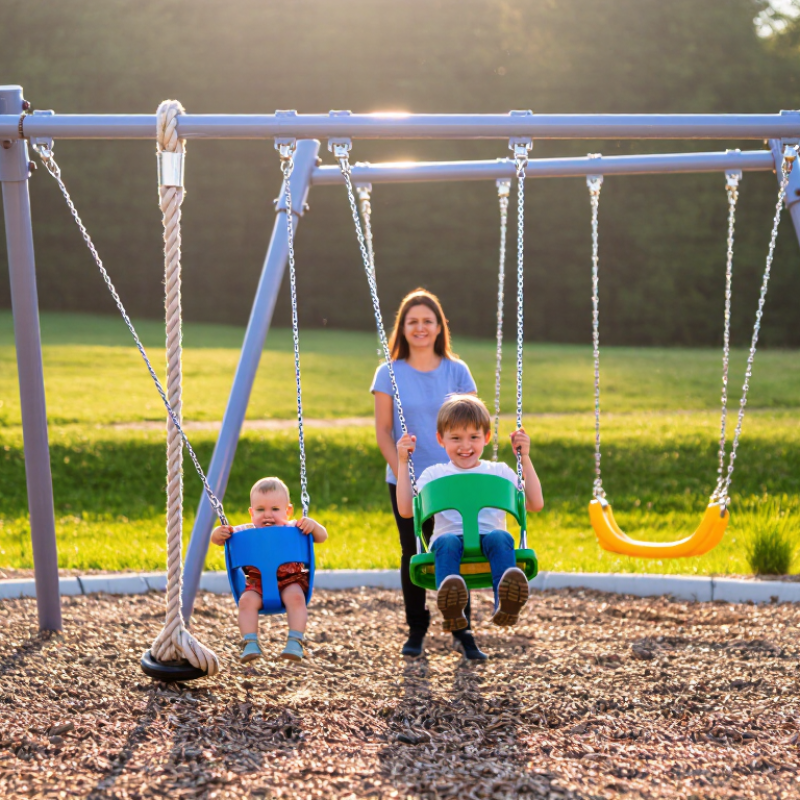
Assess the Users, Age Range, and Play Needs
Before choosing accessories, picture the actual users: a preschooler who needs a low, supportive seat has different needs from a confident school-age child seeking climbing challenges. The CDC recommends that children aged 6–17 get at least 60 minutes of physical activity daily; varied movement can help make outdoor play engaging. Age matters. Also consider height, coordination, sensory preferences, and whether children will play alone or together. A wide glider may suit siblings, while a simple belt swing may be easier for one child to use independently.
Match each accessory to a clear play need, not just its appearance. A small platform can encourage imaginative play; a climbing element offers a different physical challenge. Check the manufacturer’s age and weight guidance, and think about whether the child can grip, climb, and dismount without help. The CPSC’s Public Playground Safety Handbook reports that falls account for many playground injuries, so inspect the landing area and use suitable protective surfacing around equipment. That guidance concerns public playgrounds, but the fall risk is worth considering at home too. Reassess as children grow. I’ve seen a once-loved toddler seat become awkward surprisingly quickly, and adults can misjudge what feels manageable from the ground. A little trial and reflection helps.
10 Tips for Choosing the Best Swing Set Accessories - Assess the Users, Age Range, and Play Needs
| Tip | What to Assess | Accessory Ideas | Selection and Safety Check |
|---|---|---|---|
| 1 | Identify who will use the set, including each child’s age, size, and abilities. | Choose a seat or play feature suited to the intended users, such as a standard belt seat for children who can sit and hold on independently. | Follow the accessory maker’s stated age, size, and weight limits. Do not assume one accessory is appropriate for every child. |
| 2 | Consider developmental stage, not age alone. Balance, coordination, and confidence vary among children. | A supported bucket-style seat may suit some younger children; an open seat may better suit children who can use it safely. | Use a seat only within its instructions and supervise young children. A supportive seat does not replace adult supervision. |
| 3 | Estimate how many children are likely to play at the same time. | Consider a suitable mix of swings and turn-taking features, such as a glider or a play panel designed for multiple users. | Check the play structure’s total capacity and the permitted number of simultaneous users. Keep enough room between moving play features. |
| 4 | Match the accessories to the kind of movement children enjoy and can manage. | Options may include a swing, a low climbing feature, or a slide compatible with the structure. | Use climbing and sliding features only as intended. Check that children can reach and use them without unsafe jumping or overreaching. |
| 5 | Think about grip strength, balance, and comfort when choosing seats and handholds. | Consider a comfortable seat surface and appropriately sized handholds included or approved for the play set. | Make sure grips are secure, undamaged, and suitable for the intended users. Avoid improvised add-ons that could create snagging or entrapment hazards. |
| 6 | Include children’s interests, such as imaginative, social, or quieter play. | A play panel or other compatible activity feature can add variety without relying only on swinging or climbing. | Choose features designed for outdoor play and install them where they will not obstruct access, supervision, or moving equipment. |
| 7 | Measure the available yard space and account for the movement of swings and other equipment. | Select accessories that fit the structure and the usable play area, rather than choosing by appearance alone. | Follow the play set’s installation instructions for placement and clearance. Keep the area clear of fences, trees, hard surfaces, and other obstacles as directed. |
| 8 | Consider sun, rain, temperature changes, and the amount of outdoor exposure. | Choose outdoor-suitable materials and finishes; removable components may be useful where the instructions allow seasonal storage. | Check care instructions and inspect for wear, corrosion, splinters, cracks, or other damage after exposure to weather. |
| 9 | Check that each accessory is compatible with the play set’s structure and attachment points. | Choose accessories specified for the set or approved for its construction and intended use. | Follow the manufacturer’s installation directions and hardware requirements. Do not exceed stated load limits or modify structural parts. |
| 10 | Plan for ongoing checks as children grow and equipment gets regular use. | Prioritize durable, replaceable components and accessories that can be inspected and maintained according to their instructions. | Regularly check fasteners, connections, seats, chains or ropes, and surrounding surfaces. Stop using damaged equipment until it is repaired or replaced. |
Related Posts
-

10 Essential Tips for Understanding Play Structure in Theatre?
-

Top Clearance Swing Sets for Backyard Fun and Adventure?
-
10 Best Metal Swing Sets for Endless Outdoor Fun?
-
Top 10 Home Playground Sets to Transform Your Backyard?
-
What is a Play Yard Swing Set Benefits and Buying Guide?
-

2026 Best Vinyl Backyard Playsets for Kids and Families?