Choosing a Cosmetic Bottle manufacturer is not merely a matter of comparing prices. Buyers must weigh material options, decoration quality, minimum order quantities, lead times, and production consistency. Small details matter: a pump that dispenses evenly, a cap that stays secure, or a bottle that survives transit without leaking. Those details affect both customer experience and operating costs.
Market reports offer useful context, but they do not replace supplier checks. Grand View Research estimated the global cosmetic packaging market at USD 34.3 billion in 2023 and projected continued growth through 2030. The OECD’s Global Plastics Outlook reported that global plastic production reached 460 million tonnes in 2019, while plastic waste reached 353 million tonnes. These figures cover broad markets, not cosmetic bottles alone. Still, they show why material choices and packaging efficiency deserve attention. The numbers do not tell buyers which factory will meet a particular brief.
This guide compares ten manufacturers for global buyers. It considers product range, customization, manufacturing capabilities, and export readiness, while recognizing that performance can vary by order and location. A supplier with impressive samples may still struggle with a tight production schedule. That is worth checking. Request recent specifications, clarify quality-control procedures, and test samples under realistic handling conditions. Sustainability claims also need careful review; a recyclable design is not automatically recycled everywhere. No ranking can settle every sourcing decision. Use this list as a starting point, then verify each manufacturer against your requirements.
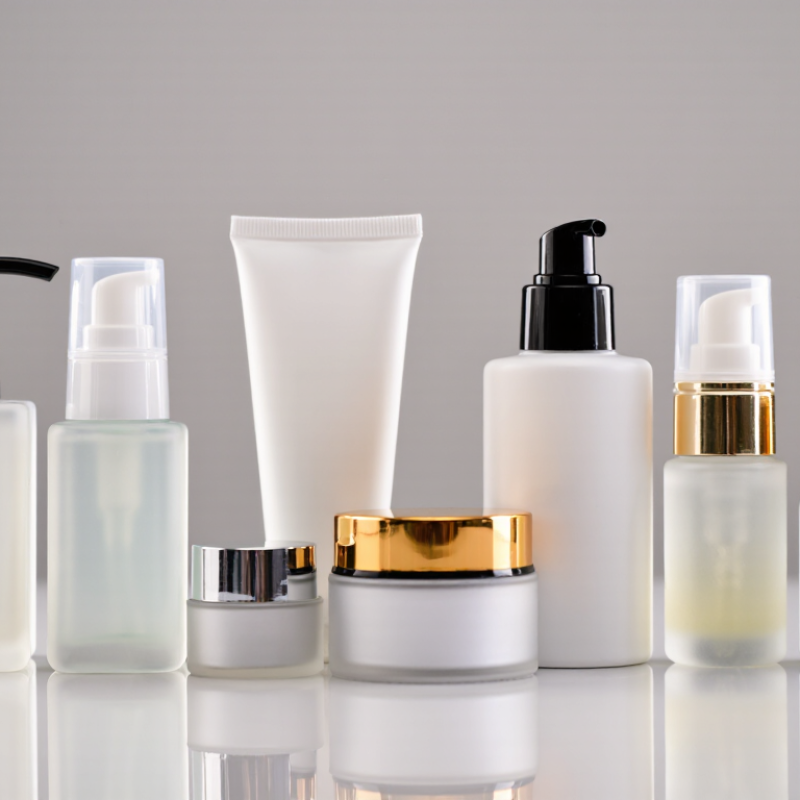
Cosmetic bottles must protect formulas, dispense cleanly, and survive shipping. Grand View Research valued the global cosmetic packaging market at USD 34.78 billion in 2022. It projected 5.4% annual growth through 2030. Material choice is not a styling detail. It affects weight, product visibility, dispensing, and breakage risk.
Glass offers a premium feel and a strong barrier, but a dropped bottle can shatter. PET is lightweight and clear, making it useful when shoppers need to see the formula. HDPE is tougher and naturally opaque, which can help protect light-sensitive contents. PlasticsEurope’s 2023 report says packaging accounted for about 39% of European plastics demand in 2022. That figure covers packaging broadly, not cosmetics alone. Still, it shows why resin selection matters at scale.
Airless formats use a pump system to dispense product while limiting air exposure. They can reduce residue around the pump, though their extra parts may complicate recycling. Small details matter. A thick cream may need a wider opening than a runny serum, and a travel bottle faces repeated knocks. A common development trap is choosing by appearance before testing the formula, pump, and bottle together. Even a good material choice can disappoint if the closure leaks or the last dose stays trapped.
A supplier comparison should begin with the order you can actually place, not the lowest quoted unit price. Request the minimum order quantity for each bottle shape, color, and decoration method; these may have separate thresholds. Ask for prices at several volumes, plus tooling, sample, and freight costs. Small details matter. A colored bottle may require a larger run than a standard clear one.
Lead time needs the same scrutiny. Ask suppliers to separate sample approval, mold production, bottle manufacturing, decoration, and shipment. Get estimated dates in writing, and check whether repeat orders use the same schedule. Customization can include resin choice, bottle weight, neck finish, cap fit, surface texture, and printing. But each change can affect cost and timing. A polished sample is useful, not proof that every production unit will match it.
Quality checks should cover dimensions, closure fit, leakage, appearance, and packaging protection during transit. Ask how defects are recorded and what happens when a batch falls outside agreed specifications. The OECD’s Global Plastics Outlook (2022) estimated that only 9% of plastic waste generated globally in 2019 was recycled. That figure makes material traceability and precise recycled-content claims worth discussing with suppliers. Request supporting documents, not just assurances. Even then, paperwork has limits; inspect production samples and retain approved reference pieces.
Choosing among the 10 best cosmetic bottle manufacturers for global buyers means checking more than appearance. A glossy sample may hide a poor pump fit or a cap that loosens during shipping. Ask for neck-finish drawings, material specifications, leak-test results, and samples from the actual production line. Small details matter.
The market is substantial. Grand View Research estimated the global cosmetic packaging market at about US$32.3 billion in 2023, with growth expected through 2030. That scale brings more suppliers, but it does not guarantee consistent quality. Buyers should compare minimum order quantities, tooling costs, production lead times, and quality-control procedures. Request written tolerances for weight, dimensions, and color. Then test filled bottles under realistic handling conditions.
Sustainability claims need scrutiny. The Ellen MacArthur Foundation reported that only 14% of plastic packaging was collected for recycling globally in its 2017 study. That figure covers packaging broadly, not cosmetic bottles alone. Still, it is a useful warning. Ask whether a bottle’s resin, pump, and label can be separated in existing recycling systems. Lightweighting can reduce material use, but a fragile bottle may create more damage and waste. There is no perfect choice. A supplier should explain the trade-offs plainly and provide evidence, not just attractive sustainability language.
Global buyers should assess cosmetic bottles against both ISO 22715:2006 and EU Regulation (EC) No 1223/2009. ISO 22715 sets requirements for cosmetic packaging and labelling; it does not replace legal checks. Under Article 19, EU labels must show applicable details such as nominal content, batch identification, ingredients, precautions, and durability information. The exact requirements depend on the product and its shelf life. Safety reports should also consider packaging material characteristics and product stability. A bottle that looks polished may still leave too little room for required text. Tiny details matter.
Market scale makes consistency important. Cosmetics Europe’s 2024 market report estimated European cosmetics and personal care retail sales at about €96 billion in 2023. Eurostat reported 83.4 million tonnes of packaging waste in the EU in 2022, or 186.5 kilograms per person. These figures do not prove that one bottle format is best. They do show why buyers should check material choices alongside label space and handling. Ask suppliers to verify label legibility on curved surfaces, cap fit, and ink durability after routine handling. A printed sample helps, but it may not reveal every production issue. Reflecting on that gap is worthwhile.
From 12 August 2026, the EU Packaging and Packaging Waste Regulation (EU) 2025/40 applies. Cosmetic bottles are within its scope. For global buyers, this date is a procurement checkpoint, not a signal that every design requirement starts overnight. Many obligations phase in over time, so suppliers should map each product to the relevant deadlines and requirements.
The scale is clear. Eurostat’s Packaging Waste Statistics report says the EU generated 186.5 kg of packaging waste per person in 2022; plastic packaging waste accounted for about 36 kg per person. These figures make bottle design more than a shelf decision. A pump bottle may combine a plastic body, metal spring, dip tube, and mixed-material cap. That sounds simple. It isn’t. Ask manufacturers for component-level material data, recyclability assessments, and evidence supporting any recycled-content claims.
Buyers should also check how suppliers control design changes and keep technical documentation current. Request samples that match production specifications, then confirm whether labels, coatings, pumps, and closures can be separated or processed with the main container. The regulation’s detailed requirements and timelines vary by packaging type, so a generic “EU compliant” statement is not enough. I would still leave room for review: material choices that look recyclable on paper may behave differently in local sorting systems.
A timeline of key dates in Regulation (EU) 2025/40, relevant when assessing cosmetic bottle packaging for the EU market.
Regulation (EU) 2025/40 entered into force on 11 February 2025 and generally applies from 12 August 2026. The regulation sets a 1 January 2030 deadline for packaging to meet recyclability requirements. Check the regulation and applicable transitional provisions for product-specific obligations.